Showing posts with label Spiritual Reflections. Show all posts

Friday, 31 January 2014

An Ordeal

My child, if you aspire to serve the Lord,
Prepare yourself for an ordeal. (Ecclesiasticus 2:1, NJB)
The word "ordeal" means an extremely severe or trying test, experience, or trial. That's what Sirach promises us if we plan to follow God. Not health and wealth, or an easy life. Not even a life that averages good and bad days. He tells us that if we want to serve God, we should be prepared for trial-by-fire type misery. Throughout the second chapter of Ecclesiasticus, he gives us the impression that this ordeal isn't going to be a one-time deal, either. In fact, let's face it: the martyrs get off pretty lucky. They get their painful trial all at once, and then their reward. For the majority of us, however, the ordeal is one of endurance, of perseverance, of continuously striving to do the difficult thing because the difficult thing is so often the right thing. Growing up Pentecostal, that wasn't a teaching I heard very often. Maybe that's because Pentecostals don't have Ecclesiasticus in their Bibles. Whether it was taught explicitly or implicitly, suffering and hardship were seen as God's disfavour. How many people do I know who started out with the noble aspiration to serve the Lord, only to find their faith shaken and shattered when the ordeal came. Where was God then? That kitschy "Footprints" poem rings a little hollow when it says God carries us through the hard times, when we look around and our world has fallen apart more than once. If we believe that God's role in our lives is just to bless us or heal us or make us happy (because that's what the Bible promises us, isn't it? Isn't it?), then we'll be woefully unprepared for the ordeals of life.

Sirach tells us to prepare for an ordeal. We need to expect difficulty, to steel ourselves for it. We're not going to always experience the consolations of an emotional sense of God's nearness. Jesus, who was God, and was always immediately present with the Father, nevertheless in His human nature, felt alone and abandoned by the Father on the Cross. Shall we, who are only human, expect to always feel that God is with us? Bl. Mother Teresa suffered through the agonising sense of separation from God every day for the last twenty years of her life. When this admission of hers was published posthumously, many people immediately jumped to the conclusion that she had somehow abandoned her faith. Yet the fact is, her commitment--to the poor of Calcutta and to God--never wavered, and she continued to do what she had always done. She was prepared for the ordeal. She knew that feelings are unreliable, but that faith and the knowledge that God will never leave us, no matter how we feel, is what is true.

This is our preparation: to know that the trial will come, and to know God, to know that His presence and His love are not dependent upon our feelings, and that our suffering doesn't mean He doesn't love us. How do we achieve this preparedness? I can think of no better way than to gaze lovingly upon the Crucifix and meditate daily upon His Passion. For love of us, He endured His own ordeal, in order that when we surrender to Him in ours, the very suffering and pain that we endure will be the source of grace. God did promise that if we serve Him, we will be happy, but He didn't promise that we would be happy in this valley of tears. So we must be prepared to persevere in hope.
You who fear the Lord, hope for those good gifts of his,
Everlasting joy and mercy. (Ecclesiasticus 2:9, NJB)

Wednesday, 11 December 2013

The Scandal of Pope Francis

With Pope Francis being awarded Time's "Person of the Year", I thought I'd reflect on just who won that award. You see, there are, in fact, three Pope Francises!

Back in the 14th Century was a period of Church History known as the Babylonian Captivity of the Papacy, followed by the Western Schism. The pope, due to certain political circumstances, had fled Rome and settled in Avignon, France. Unfortunately, successive popes became more and more influenced by the political intrigues of the French Monarchy, until they were no more than puppets of the kings of France. Through the tireless work of such saints as St. Catherine of Siena, the Pope was finally persuaded to move back to the Holy See and rule again from Rome. The French Cardinals were none too pleased by this, and set up a second conclave to elect a French pope to reign from Avignon (it didn't help that the rightful claimant of the See of Peter had become a paranoid, crotchety, and maniacal sort of fellow that nobody liked at all!); and the two popes excommunicated each other. While the world was trying to figure out whether the Roman Pope or the French Pope was really the real pope, a third pope stepped up and excommunicated them both! Of course, throughout this whole debacle, there was only one true Pope, and two "antipopes", but for a while, it was very hard to tell which was which.

Today, on a far less extreme scale, politically-speaking, there is a similar dynamic. While there aren't three different people claiming to be the pope, since the election of Pope Francis, there are three different versions of who the pope is, being claimed by various groups of people. This was put in crystal clear perspective for me recently by none other than the late, great G.K. Chesterton, who wrote a story seventy-seven years ago that captures the scandal perfectly.

((Warning: Spoilers!))In the final volume of the Father Brown stories, The Scandal of Father Brown, the first and eponymous story tells about how Father Brown got involved in a scandalous affair in which a woman had left her husband for a famous poet. A newshound had happened to follow the trio to a trysting-place in Mexico where Father Brown happened to be. The newspaperman saw Father Brown give his hotel room to the woman in order that she could escape and run off with the handsome gentleman while the aging other man tried vainly to keep the handsome man out of the hotel. The newspaperman assumed the aging, portly fellow was the woman's husband, and the dashingly handsome man was the romantic poet. When he saw that Father Brown had aided the woman in uniting with the man outside the hotel, he assumed that Father Brown was not only condoning, but aiding in adultery, and reported it immediately to the newspaper back home, and so the story went out about the scandalous priest who defied the Church to aid in this horrible sin. In fact, the handsome fellow turned out to be the husband, and the portly fellow was the poet, and the husband had come to win back his wife, who had grown bored herself of the poet's company (because poets themselves are not nearly as romantic as their poetry, after all). And while the jealous poet tried to keep the husband out, Father Brown helped the wife climb out his window into her husbands waiting arms. The chagrined newspaperman contacted the paper immediately upon hearing the truth, but the damage had already been done. Chesterton ends the story thus:
Not much more than half an hour had passed, between the time when Rock [the journalist] had telephoned to say the priest was helping the poet to run away with the lady, and the time when he telephoned to say that the priest had prevented the poet from doing precisely the same thing. But in that short interval of time was born and enlarged and scattered upon the winds the Scandal of Father Brown. The truth is still half an hour behind the slander; and nobody can be certain when or where it will catch up with it. The garrulity of pressmen and the eagerness of enemies had spread the first story through the city, even before it appeared in the first printed version. It was instantly corrected and contradicted by Rock himself, in a second message stating how the story had really ended; but it was by no means certain that the first story was killed. A positively incredible number of people seemed to have read the first issue of the paper and not the second. Again and again, in every corner of the world, like a flame bursting from blackened ashes, there would appear the old tale of the Brown Scandal, or Priest Ruins Potter Home. Tireless apologists of the priest's party watched for it, and patiently tagged after it with contradictions and exposures and letters of
protest. Sometimes the letters were published in the papers; and sometimes they were not. But still nobody knew how many people had heard the story without hearing the contradiction. It was possible to find whole blocks of blameless and innocent people who thought the Mexican Scandal was an ordinary recorded historical incident like the Gunpowder Plot. Then somebody would enlighten these simple people, only to discover that the old story had started afresh among a few quite educated people, who would seem the last people on earth to be duped by it. And so the two Father Browns chase each other round the world for ever; the first a shameless criminal fleeing from justice; the second a martyr broken by slander, in a halo of rehabilitation. But neither of
them is very like the real Father Brown, who is not broken at all; but goes stumping with his stout umbrella through life, liking most of the people in it; accepting the world as his companion, but never as his judge. ("The Scandal of Father Brown", The Scandal of Father Brown, G.K. Chesterton, pp. 22-23)
So today, we have the Media reporting (woefully inaccurately) the words of Pope Francis. His award in the Times was predicated upon their strange notion that he is going to overturn centuries of Catholic teaching in order to make things like abortion and gay marriage acceptable. Liberal people in the Church who desire such changes are eating it up and lauding the Pope for being so "new" and "different". Reactionary traditionalist Catholics are deploring the Pope's image as though the image is the reality, and using it as an excuse to support their conspiratorial notions that drive them further out of the Church itself. Meanwhile, faithful Catholics chase after these erroneous stories, filling comboxes and posting Facebook statuses about "what the pope really meant", and they themselves, fatigued by their perceived need for constant vigilance, begin to wish the Pope would, in fact, just be more "Pope-like". In all of this, Pope Francis is compared and contrasted with Pope Benedict, pitting the one against the other as though some seismic shift in the Church has actually occurred. Round and round this dance goes, like a dog chasing its tail.

And yet, like the "real" Father Brown, there is a real Pope Francis, a man who is who he is and does what he does, without any very great concern about what the world thinks of him. He is a man who is very obviously much more concerned with what Jesus thinks of him. Whether one thinks such an attitude is right for the most visible religious figure on earth to have, the fact remains that Pope Francis will continue to go "stumping with his stout umbrella through life, liking most of the people in it; accepting the world as his companion, but never as his judge."

To my mind, that is the real lesson that the Pope is teaching the world, and especially us Catholics. The Church isn't going to radically change. In fact, many places throughout the world are experiencing "The Francis Effect", with people returning to the Church (in particular the Sacrament of Confession) in large numbers precisely because of the witness of this Pope. The Media is going to spin its own agenda, and yes, we need to always be prepared to give a defence of the hope that we have as Christians (cf. 1 Peter 3:15), but we have that hope precisely because Jesus has promised that the Gates of Hell will not prevail against His Church!

The Church survived the Western Schism, and every other scandal before that and since. It will survive Pope Francis being named Person of the Year! And let's be honest: he deserves it; even if not for the reasons Time gave it to him.

So keep calm and Catholic on!

Saturday, 27 April 2013

Id Quod Visum Placet: A Christian Worldview of Aesthetics and Art -- Part 3

The Christian Approach to Art
Throughout the centuries, the understanding of the role of art in faith, and even its goodness, has varied. As we saw earlier, art seems to have been used primarily as a form of religious expression and worship. The transcendental quality of beauty and the overwhelming power of art has led to idolatry. When God rescued the Hebrew slaves from Egypt, and gave them the Ten Commandments, He very clearly forbade this idolatry, commanding that images were not to be made and worshipped (Exodus 20:4-6). The proscription against images was not absolute, however—only the worship of them was. God Himself, after all, commanded the design and ornamentation of the furnishing of the Tabernacle—including designs on the veil separating the Holy of Holies, as well as ornamenting the Ark of the Covenant, which would be condemned by an absolute proscription against images of any kind (Exodus 25ff.). He even filled the artisans, such as Bezalel, with His Holy Spirit for the carrying out of the task (Exodus 31:1-6). Moreover, He commanded the making of a bronze serpent mounted on a pole in order to save the Israelites from the punishment of snakes (Numbers 21). It was only centuries later, when that same bronze serpent began to be worshipped as an idol itself that it was destroyed (2 Kings 18:4). Despite the nuance between permission to make images and the prohibition against worshipping them, the Israelite culture did not develop much with regard to the visual arts, becoming a much more literary culture.

Iconodulia or Iconoclasm?
With the advent of Christianity, it seems that the taboo of images was let go, as the propensity of early Christian statues and images discovered in archaeological sites demonstrates (Fortescue, 1910). Since Christ is the image of the invisible God, it seems that the Christians felt that He could in fact now be portrayed (Colossians 1:15; Galatians 3:1). Icons developed as a way of honouring Christ, Mary, and the Saints, as well as fostering devotion and educating the people. These images were venerated, and miracles were often attributed to their use. Worry about breaking the First Commandment mounted until in the 8th century and influenced in no small part by Islam, the Iconoclasts tried to abolish sacred art, believing in an overly strict interpretation of the First Commandment's condemnation of image-making and idolatry (Fortescue, 1910). However, this position was condemned by the Second Council of Nicaea, and while the iconoclast persecution continued for about a hundred more years, eventually the true use and veneration of images won out, with only patches of iconoclastic sentiment, primarily in Germanic areas (Fortescue, 1910). It was at the Reformation that iconoclasm would rear its ugly head once more in the 16th century, as idolatry would once more be levelled as a criticism against the Church. Ever since, the Catholic Church has continued to use sacred images in worship as always, and indeed has been an enduring patron of artistic expression, while Protestants have had a love-hate relationship with imagery and art (Morgan, n.d.).

Fear of Imagination and the "Safe" Christian Sub-Culture
This ambivalence towards art stems in many ways from a fear of the imagination. Because of its unpredictable and intuitive nature, it is difficult to rein in the imagination with propositional truths. This fear of the imagination within the Protestant world, especially in North America, has led to the creation of a Christian sub-culture, wherein the larger culture is imitated (Christian rock and roll, Christian romance novels, etc.) but no significant impact on the culture at large is being made. There is a reason why, despite equal or superior levels of technical skill, "Christian" art and "Christian" music is always seen as inferior to its secular counterparts; and that is its very lack of imagination, its desire to be "safe" (Wolfe, 2011, pp. 24-25). There seem to be only two uses for art in contemporary evangelicalism: to cordon oneself off from the secular world (while still enjoying aspects of the secular culture, guilt-free), or to attempt to evangelise. Like the moderns who placed art at the service of beauty for the sake of pleasure alone, the Christian sub-culture mentality places art at the service of the Gospel, reducing it to merely a tool. About this tendency, Gregory Wolfe (2011) writes:
If art is dominated by a moralistic desire to preach at the audience, it will become lifeless and didactic. We can easily spot didacticism when its message is different from what we believe, but no one who cares about art should confuse it with politics or theology. Art does not work through propositions, but through the indirect, "between the lines" means used by the imagination. (p. 24)

Christian Humanism and the Doctrine of the Incarnation
What, then, is the Christian approach to art? Christian humanism. We must embrace art for art's sake, precisely because the act of so doing will make us more fully human. Art is incarnational; it is, or can be, redemptive. Rather than trying to withdraw from contemporary culture, or to "baptise" elements, Christian artists need to participate in the culture, and discerningly see it in the light of the Gospel. If art is about being human, we need to know what it is to be human, and to express that truthfully portraying the condition of the world, and showing how grace can penetrate into and speak to those conditions (Wolfe, 2011).

Jesus Christ, in becoming a human, united the divine with the material, the infinite and the temporal. He elevated the physical and made it capable of conveying grace. This is what the Incarnation is about; it is what sacramentality is about. Christian art participates in this sacramental and incarnational worldview because it is the uniting of form and content. In art, the medium and the message are entwined (Wolfe, 2011).

This is the real way in which Christian art evangelises—not by being consciously used as a tool for evangelism, but precisely by being art, and art that shapes culture. Fr. Barron (2013) points out that in this post-modern age, when truth is seen as relative, and good as situational, where propositions are rejected and subverted, that the beautiful, by its very nature, still speaks to hearts and imaginations. Beauty reveals to us truth and goodness, and shows us where we fall short—not propositionally, but intuitively (Scarry, 1999). Through art, we participate in that invitation to the transcendent. To a world enveloped in naturalistic and materialistic philosophy, great Christian art reminds us that there is something more, something spiritual, something transcendent, and something infinite. Like the sun through the wings of swans, Truth, Goodness, and Beauty shine through Art and invite us out of ourselves and into an intimate encounter with the Source of grace and being.
[T]here is a special quality in the essence of beauty, a special quality in the status of art: the conviction carried by a genuine work of art is absolutely indisputable and tames even the strongly opposed heart..... It is vain to affirm what the heart does not confirm. In contrast, a work of art bears within itself its own confirmation:.... Works steeped in truth and presenting it to us vividly alive will take hold of us,will attract us to themselves with great power—and no one,ever, even in a later age, will presume to negate it. And so perhaps that old trinity of Truth and Good and Beauty is not just the formal outworn formula it used to seem to us during our heady, materialistic youth. If the crests of these three trees join together, as the investigators and explorers used to affirm, and if the too obvious, too straight branches of Truth and Good are crushed or amputated and cannot reach the light—yet perhaps the whimsical, unpredictable, unexpected branches of Beauty will make their way through and soar up to that very place and in this way perform the work of all three.

And in that case it was not a slip of the tongue for Dostoevsky to say that "Beauty will save the world," but a prophecy. (Solzhenitsyn, 1970)

References for Part 3
Barron, R. (2013, February 19). "To evangelize through beauty." Catholic News Agency. http://www.catholicnewsagency.com/column.php?n=2476

Fortescue, A. (1910). Iconoclasm. In The Catholic Encyclopedia. New York, NY: Robert Appleton Company. Retrieved from: http://www.newadvent.org/cathen/07620a.htm

Fortescue, A. (1910). Veneration of Images. In The Catholic Encyclopedia. New York, NY: Robert Appleton Company. Retrieved from: http://www.newadvent.org/cathen/07664a.htm

Morgan, David (n.d.). The Protestant Struggle with the Image. Retrieved from: http://www.religion-online.org/showarticle.asp?title=840

Scarry, Elaine. (1999). On Beauty and Being Just. Princeton, NJ: Princeton University Press.

Solzhenitsyn, A. (1970). Nobel lecture. In G. Wolfe (Ed.), Beauty Will Save the World (p. vi). Willmington, DE: ISI Books.

Wolfe, Gregory. (2011). Beauty Will Save the World. Wilmington, DE: ISI Books.

Friday, 26 April 2013

Id Quod Visum Placet: A Christian Worldview of Aesthetics and Art -- Part 2

The Image of God
Human beings are the only creatures in the world who make art—that is, who create images, literary works, musical compositions, for the sheer sake of creating. This uniqueness is as undeniable as it is important. It cuts to the very heart of naturalistic understandings of the world; it overturns behaviouristic models of psychology; it demands an explanation. As G.K. Chesterton (2008) remarked in his inimicable way,
It is the simple truth that man does differ from the brutes in kind and not in degree; and the proof of it is here; that it sounds like a truism to say that the most primitive man drew a picture of a monkey and that it sounds like a joke to say that the most intelligent monkey drew a picture of a man. Something of division and disproportion has appeared; and it is unique. Art is the signature of man. (p. 12)
An Evolutionary Explanation?
Denis Dutton makes a very similar claim in his book, The Art Instinct, commenting on the claims that artistic endeavours are carried out by other animals. To the example of monkeys in zoos painting pictures, he replies by pointing out that the monkey merely enjoys splattering pigment on paper. For the monkey, it is not art, that is, creation, but rather an act of destruction and defacement. The only reason it looks like a picture is because the zookeeper takes the paper away from the monkey at just the right time. If the paper is left with the monkey, it will continue to spatter it with paint until it becomes a muddy brown blob, or is otherwise torn up (Dutton, 2009). He remarks as well that the monkey, after the image is taken away and displayed, shows no further interest in it. It does not gaze upon the image, but pays it no more attention whatsoever. Dutton goes on to describe the Bower Bird, which does seem to create art, in the form of highly decorative nests. But even this form of grand architecture cannot be considered art—that is, creation for creativity's sake. It serves but one purpose—mating. Dutton reiterates the point that Chesterton made some eighty years earlier: art is the signature of man.

Yet Dutton (2009), being himself a materialistic philosopher, cannot accept Chesterton's own conclusion about what sets man apart from the beasts. Despite the yawning chasm that separates humankind's creativity from the instinctual efforts of monkeys and bower birds, he attempts to sketch an evolutionary origin to the "art instinct" in humankind, claiming that it is a blend of both the survival instinct (concluded from people's propensity for liking paintings of landscapes) and the sexual instinct (claiming that, like the bower bird, humans started being creative as a form of strutting). Somehow, over tens of thousands of years, the survival instinct to live in hospitable environments and the sexual instinct to impress one's mate, evolved into the desire and the ability to create for creativity's sake. In all of this, however, Dutton fails to account for the sharp distinction that he himself made between the bower bird's bowers and, for example, Fra Angelico's frescoes. At what point did human creations go from being merely biologically-motivated products, to "art"?

The Failure of the Evolutionary Model
The example of Fra Angelico was not merely put forth because he is my favourite artist, but precisely because his works in a particular way are devoid of the evolutionary motivations that Dutton claims underlie human art. Fra Angelico was not, primarily, a painter of landscapes, but of devotional religious images. Being a friar, sexual instincts were hardly at play, since he was celibate. One could suggest that monetary remuneration was a consideration, except for his vow of poverty. The evolutionist might reasonably claim that not every artist throughout history needs to be specifically motivated by the instincts which led to the development of the art instinct. This is especially true of an Early Renaissance artist, so far removed from the man in the cave painting reindeer on the walls. Yet sexuality and survival fail to account for perhaps the most common theme of art through the ages—the same theme that was Fra Angelico's own exclusive focus: art as worship.
Metanarrative and "Metaesthetics"
Religious elements have been a constant of artistic expression for as long as there has been art. From cathedrals in the Middle Ages to the Parthenon of ancient Greece, to the Pyramids of the Egyptians, religious monuments have dominated the landscapes, and have been decorated with statues and paintings of gods and heroes (Janson and Janson 1995). Predating even these, archaeologists have discovered other, more ancient worship sites, such as Stonehenge (c. 2000-5000 BC) (Janson and Janson, 1995), and, thousands of years before that, the temple ruins of Gobekli Tepe in Turkey, dated c. 10,000-11,500 BC (Dietrich, Heun, Notross, Schmidt, Zarnkow, 2012). Even the cave art of which Chesterton speaks above is thought to have magical motivations (Janson and Janson, 1995). Beyond merely survival or sexuality (though certainly related to each to a point), the human impulse to create is tied directly to a human impulse to worship. In what sense evolutionary biology can explain how ideas and instincts regarding transcendence could emerge in a purely naturalistic universe have yet to be satisfactorily explained. The artistic impetus in humankind is what sets us apart from all other creatures; our creativity is a key dimension to what it means to be created in the image of the Creator.

What Is Art?
Artists, philosophers, critics, and scholars have pondered this uniquely human activity that is art. Over the centuries, various definitions have been put forth. For Plato and other classical philosophers, Art was any special craft or skill, no matter toward what end it was directed. Until the concept of "Fine Art" was introduced during the Renaissance, various forms of science were classified together with painting and the composition of music (Tillman and Cahn, 1969). With the Renaissance and the advent of the modern era, the distinction was made between "fine arts" and the sciences and other disciplines. Art came to be seen as the celebration, imitation and manufacture of beauty (Danto, 2003). However, the current post-modern thought tends to divorce art from beauty, and even goes so far as to reject beauty from art on principle. The changing philosophical attitude towards art's relationship with beauty serves to highlight the fact that while there is certainly a connection between art and beauty, they are not the same thing.

If art is not necessarily the human creation of beauty, then what is it? Leo Tolstoy, reacting to the modern notion that art is about beauty, insists that no real definition can be ascertained until we put that understanding aside, and realise that art isn't "about" something else at all, but is, rather, "one of the conditions of human life" (1962, p. 378). He explains that, like language, art is one means of communication between persons. Viewing it in this way, we cannot fail to observe that art is one of the means of intercourse between man and man. Every work of art connects the artist with each viewer who views the work, and connects one viewer to another. This relationship goes beyond the immediate present, but because of the enduring nature of art, extends throughout time for as long as the art itself exists. Tolstoy contrasts art with the language of words in that while words convey thoughts, art transmits feelings (1962, p. 378).

Gregory Wolfe picks up this idea in his book, Beauty Will Save the World (2011), when he compares our fragmented culture to Babel. He writes:
Art, like religious faith in general and prayer in particular, has the power to help us transcend the fragmented society we inhabit. We live in a Babel of antagonistic tribes—tribes that speak only the languages of race, class, rights, and ideology. That is why the intuitive language of the imagination is so vital. Reaching deep into our collective thoughts and memories, great art sneaks past our shallow prejudices and brittle opinions to remind us of the complexity and mystery of human existence. The imagination calls us to leave our personalities behind and temporarily to inhabit another's experience, looking at the world with new eyes. Art invites us to meet the Other—whether that be our neighbour or the infinite otherness of God—and to achieve a new wholeness of spirit. (p. 22)
Art, then, is the act wherein the artist seeks, on the one hand, to express him- or herself through the transformation of material things, and on the other, to communicate on another level than the propositional and unite with others in a much more intuitive way. While art needs not be completely focussed upon beauty as its end, there is a transcendental quality to art all the same. It bridges time and space, opening ourselves up to others.

Art and Meta-narrative
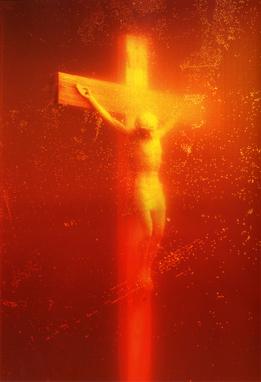
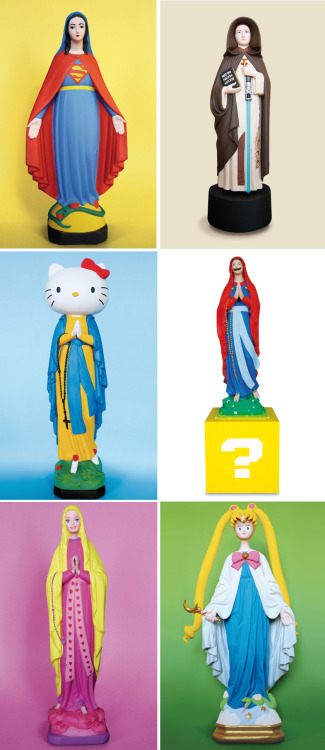
If art is communicative, then it needs something to communicate. If it is participatory, then it needs to participate in something. Being a quintessential aspect of humanity, clearly art must participate in the overarching human story, and convey the human condition. In other words, good art needs a meta-narrative This is the root of the criticisms made against "modern art" (which is really "post-modern art"; most people tend to very much enjoy "modern art" rightly understood). Post-modernism can be understood as the rejection of meta-narratives—or, as Chesterton put it, "Everything matters—except everything" (2012),—and this is reflected in its artistic expressions. Either there is no clear meaning to the image (which is itself the work's "meaning"), or the meaning is a purposeful (if crass) subversion of institutions and meta-narratives, such as the Church and the Gospel (consider the "Piss Christ" by Andres Serrano, 1987; or "Apparitions" by Soasig Chamaillard, 2011).

It is the quality of good art, on the other hand, that it brings that story home to its viewers, that they are able to enter into its narrative, in which they find the artist, themselves, and each other. Overarching concepts such as good and evil, truth, love, and, yes, beauty, are integral to art, even if they are not the sole purpose of art. That is, we do not do art solely to create something beautiful, but since beauty is, as we said earlier, a transcendental—that is, a fundamental characteristic of being, art will possess beauty in some degree, just as it will possess goodness and truth (Maritain, 1962).

"Metaesthetics"
The purpose of art is not to make truth-claims or ethical statements; however, as Philip Leon writes, "it presupposes the ethical experience in the sense that no art, at any rate, no great art and least of all great poetry can be produced or appreciated except by men who are sensitive to good and evil" (1925, p. 623). It is this meta-narrative thrust proper to art that leads us to the proper association it has with aesthetics. Unlike the modern ideology that put art at the service of beauty merely for the sake of pleasure, art and beauty should rather serve their own transcendental purpose of drawing people out of themselves and into that relation with the Other, of which Wolfe spoke above. To participate in the peculiarly post-modern penchant for neologisms (Janson and Janson 1995, p. 903), one might call this approach to art, "Metaesthetics", that is, infusing the beautiful into art not as an end in itself, but as a means of propelling the receiver of the artistic experience out of his or her own presuppositional milieu, into the realm of intuition and imagination, where those presuppositions can be challenged and, if need be, altered. Of this "metaesthetical" approach to art and beauty, Jacques Maritain (1962) writes, quoting the poet, Charles Baudelaire,
Beauty, therefore, belongs to the transcendental and metaphysical order. This is why it tends of itself to draw the soul beyond the created. Speaking of the instinct for beauty, Baudelaire, the poète maudit to whom modern art owes its renewed awareness of the theological quality and tyrannical spirituality of beauty, writes: "...it is this immortal instinct for the beautiful which makes us consider the earth and its various spectacles as a sketch of, as a correspondence with Heaven... It is at once through poetry and across poetry, through and across music, that the soul glimpses the splendours situated beyond the grave; and when an exquisite poem brings tears to the eyes, these tears are not proof of an excess of joy, they are rather the testimony of an irritated melancholy, a demand of the nerves, of a nature exiled in the imperfect and desiring to take possession immediately, even on this earth, of a revealed paradise." (p. 480)
Maritain attributes this effect of a transcendental experience of beauty to love, claiming that the delight taken in beauty excites love, and that love leads to ecstasy—that is, being outside of oneself (1962). It is this ecstatic effect of beauty which leads to the "radical decentering" mentioned by Scarry in part 1, which leads to equality and justice. Fr. Robert Barron, president of Mundelein Seminary, sums up this process, describing it as a sort of "alchemy of the soul", awakening it to participate in the beautiful, to imitate it, and then to share it (Barron, 2013). This process is automatic in the human soul, regardless of one's faith or lack thereof. Recently an atheist friend of mine posted a status on Facebook describing seeing a flock of swans flying over his car in the sun during his commute. He happened to watch as the sun shone through the wings of the swans, lighting them up into a dazzling gold. He told me, when I asked him what the experience did to him, "the sight gave me a sense of belonging in that moment, as if I was somehow invited to be part of something deeper and more intimate than the mere act of driving my car home" (Kane Freeman, personal correspondence, April 13, 2013). The third part of Fr. Barron's alchemic process, the sharing, is what prompted my discussion with Kane in the first place—his very desire to freely and publicly describe the event on Facebook. Kane, of course, is right, even if he himself doesn't know the full import of the feelings arising within him: he was indeed being invited to be part of something deeper.
References for Part 2
Barron, R. (2013, February 19). "To evangelize through beauty." Catholic News Agency. http://www.catholicnewsagency.com/column.php?n=2476

Chesterton, G. K. (2012). Heretics. London, England: Catholic Way Publishing.

Chesterton, G. K. (2008). The Everlasting Man. Radford, VA: Wilder Publications.

Danto, A. C. (2003). The Abuse of Beauty: Aesthetics and the Concept of Art. Chicago, IL: Open Court Publishing Company.

Dietrich, O., Heun, M., Notroff, J., Schmidt, K., & Zarnkow, M. (2012). The role of cult and feasting in the emergence of Neolithic communities. New evidence from Gobekli Tepe, south-eastern Turkey. Antiquity, 86(333), 674-695. Retrieved from: http://cat.inist.fr/?aModele=afficheN&cpsidt=26281965

Dutton, D. (2009). The Art Instinct: Beauty, Pleasure, and Human Evolution. Oxford, England: Oxford University Press.

Janson, H.W., & Janson, A. F. (1995). History of Art, Fifth Edition. New York, NY: Harry N. Abrams, Inc.

Leon, P. (1925). Aesthetic knowledge. In E. Vivas & M. Krieger (Eds.), The Problems of Aesthetics: A Book of Readings (pp. 619-625). New York, NY: Holt, Rinehart and Winston.

Maritain, J. (1962). Art and beauty. In F. A. Tillman & S. M. Cahn (Eds.), Philosophy of Art and Aesthetics: From Plato to Wittgenstein (pp. 474-483). New York, NY: Harper & Row, Publishers.

Tillman, F. A. & Cahn, S. M. (1969). Philosophy of Art and Aesthetics: From Plato to Wittgenstein. New York, NY: Harper & Row, Publishers.

Tolstoy, L. (1899). What is art?. In F. A. Tillman & S. M. Cahn (Eds.), Philosophy of Art and Aesthetics: From Plato to Wittgenstein (pp. 373-388). New York, NY: Harper & Row, Publishers.

Wolfe, Gregory. (2011). Beauty Will Save the World. Wilmington, DE: ISI Books.

Thursday, 25 April 2013

Id Quod Visum Placet: A Christian Worldview of Aesthetics and Art -- Part 1

Aesthetics: The True, the Good, and the Beautiful
From Classical times down to the modern era, Philosophers have described three qualities of being, known as the Transcendentals. Everything that is, possesses in some degree appropriate to itself, Truth, Goodness, and Beauty (Gilson, 1965). These transcendentals serve both as a way to value a particular thing in itself, and, as the name suggests, their presence in each and every thing points beyond themselves to the fullness of Truth, Goodness, and Beauty. Nor are these characteristics limited to Classical philosophy, but are recognised across peoples and faiths as diverse as Western Christianity and the Hinduism of India (Venkatesh, 2011). Indeed, as each of these qualities is present in everything, they are thus united. While they are distinguishable, they are inseparable—much like the very God who created all things. The very absolute to which the true, the good, and the beautiful point is indeed God Himself.

The Aesthetical Problem: The Attack on Beauty
The popular saying, "Beauty is in the eye of the beholder" seems to give the lie to the claim that beauty is a transcendental. In fact, with the rise of naturalistic philosophies since the Enlightenment, the transcendentals have been questioned and denied, relegated, as Aleksandr Solzhenitsyn put it, to the status of "a formal outworn formula" (Solzhenitsyn, 1970). Of course, if materialism is true, then there is nothing for truth, goodness, and beauty to transcend to. There is no objective truth, no objective goodness, and no objective beauty. This materialistic denial of the transcendentals has led modern philosophers, aestheticians, and artists to not only deny the value of beauty in art, but to even object to it! Reacting to the perceived abuse of beauty as the goal of art, the Enlightenment saw aesthetics redefined inextricably in terms of taste (Danto, 2003. p. 147). This identification eventually reduced itself to the cliché, "I don't know much about art, but I know what I like." The alleged subjectivity of aesthetics led to its ultimate divorce from art in the 1960s (Danto, 1997).

As well, the darkness of the world led many to reject beauty. The German Dada movement, for example, began specifically as a reaction to the understanding of beauty as indicating or informing morality. When the nations which in Kant's estimation were the most aesthetically and thus morally advanced, ravaged the world in the Great War, many became disillusioned with beauty (Danto, 2003, p. 48).

Ironically, a third attack on beauty came about because people feared that it was too powerful! According to Elaine Scarry, Aesthetics Professor at Harvard University, beauty is attacked by proponents of social justice, who claim that the captivating nature of beauty distracts us from the injustices in the world, preventing us from making necessary changes. Moreover, critics of beauty claim that when we give our attention to a beautiful thing, we objectify it (such as in the case of staring at a beautiful woman) (1999, p. 58). In other words, the arguments claim that beauty cannot be a transcendent quality of being precisely because it isn't objective, doesn't promote the good, and in fact prevents it.

Rescuing Beauty—or Beauty to the Rescue
When a person claims that beauty is subjective, they are rightly pointing out that what one person finds beautiful in a particular context, another may find less so, or perhaps even not at all. There is a degree of subjectivity, of taste, and even of cultural conditioning behind our valuations of beauty. Yet it is also true that there are some things that are universally held to be beautiful, by all people of all cultures at all times. Everyone who can see considers a sunset to be beautiful, or the night sky, or the shape of a woman. According to Denis Dutton, a major survey was undertaken, questioning upwards of two million people about what they found beautiful, across cultures and continents. The answers were shockingly consistent (notably, natural, hospitable landscapes and the colour blue were found to be particularly universal) (Dutton, 2009). While there are individual and cultural variations on the exact particulars of taste, beauty as such remains a truly universal and transcendent quality.

Whether beauty can be equated with the good, i.e., the moral, will be taken up further on in this paper. To respond to the particular criticism of the Dadaists, however, it seems self-evident that just as one can reject the good that one knows and do evil, when that good is laid out in ethical or legal propositions, similarly one can reject any good that he or she may know from beauty in the same or similar ways. If beauty is coterminous with the good, that in no way would guarantee that a culturally-advanced society will not, for various reasons, ignore that knowledge of good or beauty. Just as the Great War does not nullify the validity of ethical teachings, neither should it cause us to reject the reality of beauty. After all, we do not discard the Ten Commandments simply because the nation to whom they were revealed, often followed them so poorly.

What of the third criticism? Beauty certainly is powerful, but does it destroy justice? On the contrary, as Scarry (1999) notes, quoting Simone Weil,
At the moment we see something beautiful, we undergo a radical decentering. Beauty, according to Weil, requires us "to give up our imaginary position as the centre.... A transformation then takes place at the very roots of our sensibility, in our immediate reception of sense impressions and psychological impressions."... It is not that we cease to stand at the centre of the world, for we never stood there. It is that we cease to stand even at the centre of our own world. We willingly cede our ground to the thing that stands before us. (pp. 111-112)
Rather than hindering justice by either blinding us to injustice, or by leading us to objectify the beautiful thing, beauty calls us into relationship with the beautiful. We want not only to enjoy it for ourselves, but to preserve and increase beauty so that all people might share in it.

Beauty opens up our hearts and causes us to want to preserve or create more beautiful things, in order to participate in some small way in the transcendent, ourselves. There is something that happens in one's psyche, in one's soul, when confronted with the beautiful. Consider the reaction of so many to the presence of a baby or young child, summarised in the expression, "I could just eat them up!" Considered literally, that is a horrible sentiment! And yet, when placed in that position, enraptured by the innocence and beauty of the child, one finds him- or herself at a loss for how else to describe the arousal of the appetite for beauty. We desire to consume what is beautiful—to take it into ourselves so that we might by doing so, become more beautiful ourselves, and thus to bring more beauty to bear in our world. When I visited Haiti in 2010, and saw the beauty of the mountain vistas, I had a similar impulse for creativity as I exclaimed as I gazed at distant summits verdant with bamboo and banana trees, "I have to paint this!" This creative impulse and response to beauty is universal to all people (even those who have no natural talent for creative arts), and is, in fact, a distinct feature of what makes humans, human.

References for Part 1
Danto, A. C. (1997). After the End of Art: Contemporary Art and the Pale of History. Princeton, NJ: Princeton University Press.

Danto, A. C. (2003). The Abuse of Beauty: Aesthetics and the Concept of Art. Chicago, IL: Open Court Publishing Company.

Dutton, D. (2009). The Art Instinct: Beauty, Pleasure, and Human Evolution. Oxford, England: Oxford University Press.

Gilson, E. (1965). The Arts of the Beautiful. New York: Charles Scribner's Sons.

Scarry, Elaine. (1999). On Beauty and Being Just. Princeton, NJ: Princeton University Press.

Solzhenitsyn, A. (1970). Nobel lecture. In G. Wolfe (Ed.), Beauty Will Save the World (p. vi). Willmington, DE: ISI Books.

Venkatesh, Smita Khadri (2011, May). Satyam Shivam Sundaram - Philosophy of Indian Art. Retrieved from: http://commentary.kalaparva.com/2011/05/satyam-shivam-sundaram-philosophy-of.html

Wednesday, 17 October 2012

"Fiat Familia"

By way of a brief introduction, this was a paper I had to write for the hermeneutics course I'm taking right now. The assignment was to sum up the story of the Bible, in narrative form, in just four pages (max), with a font size of 12, double-spaced. I am indebted to St. Augustine's presentation of the faith in his work, "De Catechizandus Rudibus", and to Dr. Scott Hahn's book, "A Father Who Keeps His Promises" for the idea of seven ages and covenants of God's revelation as the theme of Scripture.
Out of an overflow of perfect, infinite love, the Almighty God created the world and everyone in it. While perfectly happy and without need, subsisting eternally as a family—the Father, the Son, and the Holy Spirit—God nevertheless desired to create others whom He could love, and who, in turn, could love Him and participate in that divine family. And so, with all the infinite wisdom at His disposal, He fashioned the earth, the sun, the moon, the stars, and all that is. He made all creatures according to their kinds, in an intricate web of interdependent connections. The world itself was like a family, each part dependent on each other, to support life. And over it all, God made Man, in His own image. God gave him special gifts of grace to enable man to live perfectly, and He appointed man to oversee, to protect, and to care for the world and its intricate order. And, having done so, God rested—not because He had grown weary, but so as to make a covenant, the first covenant, with man.

But the man that God had created was himself alone in the world. Alone, the man was unlike God precisely in his solitude. God saw that it was not good for man to be alone, and so He made from his own self a mate, suitable to him, whom the man named Woman. Thus through love, they together imaged God more completely. Marriage in love, fidelity, and unity became a new, second covenant with God and man, and man and woman together.

Man and woman were instructed by God to live the covenant of love and family, with each other, with the world, and with God. He gave them their freedom, so that their love could be genuine, but in their freedom, they failed to love. The enemy of God, Satan, one of God’s own creatures, tempted the woman to love herself more than anyone else, and she in turn tempted the man to do likewise. They failed to love God above all, and to love each other. And so, as a result, the man and the woman lost that original gift of grace. But God promised to one day restore all men and women to covenant with Him.

Yet the original sin of the man and the woman affected their children, whose desires warred in them against the truth and against the good that is to be found in God alone. They were given to pride, envy, greed, wrath, sloth, gluttony, and lust. They lived sinful lives of grave injustice. After many generations of this evil behaviour, God responded in His justice, by destroying His world with a flood. And yet, God’s loving mercy nevertheless spared one man, and his family, because they strove to love Him in return. And thus that family was instructed to build an ark that they would be saved from the flood, as well as a pair of each animal on earth. Saving this family and covenanting with them was the third covenant that God made with Man.

But as that family grew and multiplied, the concupiscence resulting from the loss of that original gift of God continued to draw people away from Him and from His covenant. After several generations, God reached out again to a man, instructing him and his wife to follow Him. Leaving everything, they obeyed God, and, despite their barrenness, God blessed them with a family, and that family grew into a mighty tribe. Through circumcision, they set themselves apart from all the other tribes of the world, as devoted to God alone. And God blessed the tribe, by making the fourth covenant with man.

The tribe grew and prospered, but during the course of time, they fell under hard times, and were forced to leave their land during a famine. Dwelling securely in a foreign land of plenty, they forgot God, until one day they found themselves enslaved by their foreign ruler. Remembering their covenant with God, they cried out to Him, and God heard their cry. He raised up another man to lead them out of slavery, into a land of promise. He gave this man a Law so that this people would be always able to remember their covenant with God and obey Him. And He established this people in a new land, with a new law, as a new nation, and He once more covenanted with them. This is the fifth covenant that God made with man.

The nation continued to grow and prosper when it remained obedient to the Law, but many times the people neglected or ignored the Law of God, and so were chastised by Him. As they dwelled in the land that He had given to them, they saw other nations around them, nations with no knowledge of God or covenant with Him, and they saw how kings ruled these nations. And the covenant nation desired to have a king like the other nations. God warned the people that a king would only cause them grief, but they insisted. So God gave them a king to rule them. The first king ruled poorly and was disobedient to God’s covenant, and so He raised up a new king, who was faithful to God. And God rewarded this king’s faithfulness by making a new covenant with him, that the nation would be a kingdom, and that one of his descendants would always be king, provided that the kings and the kingdom remained faithful to God‘s Law. This was the sixth covenant that God made with man.

As the kings and the kingdom prospered, however, they again abandoned the covenant with God, and God raised up prophets to warn them. But the kings refused to listen, and so God raised up armies against them to drag the kingdom away into exile. But His prophets foretold that if the kingdom repented, God would heal them, and make a new covenant—a perfect covenant.

And after ages passed, and the people returned from exile, they returned to the Law of God and to their covenant with Him. And in the fullness of time, God acted in a new way. He did not simply call a man to lead His people. God Himself became a Man! Out of His infinite love for the world that He had made, God the Son came to show the world how to truly honour the Father, how to live the Law and the covenant that He had made with them. The Son’s name was Jesus, because He had come to save the people from their sins. But the people rejected Him, despite the miracles and the good things He did and taught. And they crucified Him. But before they did, He said to His followers that this was always the plan: to show them God’s love, God Himself would die as a sacrifice for them, so that through His death, and through the resurrection that would come, they might have grace once more to truly live the Covenant. For the covenants that had come before served to show the people that they needed God’s own strength to fully live as family with Him and with each other. And He took bread and wine, and transformed it into His body and blood to be spiritual food for His followers, so that they would receive that divine grace from Him. And Jesus was taken, and beaten, and hung on a cross. And He died, for all of us, that we could be brought back into the family of God.

On the third day, Jesus rose again from the dead, and appeared to His followers. He promised them His Spirit to strengthen them, and His real Presence with them in that spiritual food, the Eucharist. He founded a Church, to go out into the entire world, that all people would know His love and be part of His Covenant, the seventh and perfect Covenant.

The Church He founded isn’t perfect, and those who follow Him often fail. That ancient enemy, Satan, is always seeking to lead us away from Christ, to disobey His Covenant. But through His sacrifice, He has given us seven oaths, or sacraments, by which we can obtain grace from Him to renew and strengthen our family relationship with Him, and live according to His Law, beginning with Baptism, by which anyone can enter into the Family of God through a new, spiritual birth.

And what is more, Jesus has promised that He will return in glory someday. He will judge those who refused to enter into His family, and on the other hand, warmly welcome and embrace all those who are His family! The seventh Covenant will last forever, in a new heaven and earth that will be free from all sin, where we will enjoy eternal Rest with God!

Monday, 17 September 2012

Glorious Intentions

The Glorious Mysteries of the Rosary bring our prayer and our Christian life full-circle. In our lives, the various trials, tribulations, and sufferings test our practice of the virtues, especially our faith, hope, and love. Every Rosary begins with three Hail Marys for the intention of growing in these three virtues, but the wisdom of the Rosary is shown that here, at the end of the chain, our very meditations are offered for the increase in these virtues, as we focus on and prepare for the end of our lives when we will obtain the promises of eternal life that the Rosary itself reminds us that Jesus offers to His servants and friends.

The First Glorious Mystery: The Resurrection of Jesus
For the Virtue of Faith

It almost seems counter-intuitive to start praying for the virtue of Faith here at the end of the Rosary's mysteries. Does not our spiritual life, our justification, our relationship with Jesus begin with faith? Absolutely! But Scripture teaches us that the just shall live by faith, not simply express their faith at some point in the past and have that settle the issue. Our Christian life begins with faith, but that faith must continue, grow, and develop throughout our lives. And when our world is shaken and our faith is tested, as through the sufferings that were the focus of the Sorrowful Mysteries, our faith must be revived and reinvigorated.

The Disciples themselves, having lived with Jesus for years, were still devastated at His death. The faith that they had built and nurtured barely survived the Crucifixion. It was in His Resurrection that their faith was restored and energised. They had faith when they first began walking with Him, but now their faith was solid and unshakable. So too our own faith must be strengthened as we meditate on Jesus' resurrection, and His very present reality in our own lives.

The Second Glorious Mystery: The Ascension of Jesus
For the Virtue of Hope

Where faith is about knowing Jesus, and focussing on His presence, here and now in our lives, the virtue of hope is future-focussed. Through the hard times, the suffering, the futile efforts to meet our daily needs and struggle through those moments when God seems to have abandoned us, hope keeps us looking forward, knowing that these hard times will not last. It keeps our eyes fixed on that often-dim speck of light in the distance. Without hope, we cannot move forward, for we stop believing that there is a forward toward which to move.

But hope, of course, depends on faith. For we must know and trust Jesus in order to hope in His promises. And so after meditating on His Resurrection in order to grow in faith, we ponder His ascension and increase our hope. We are able to cling tightly to the promise that Jesus knows us and has a plan for our good, so that we can endure the hardships of life without becoming beaten down. Like the sailor who navigates by the light of the North Star, we can maintain a steady course through the darkness.

The Third Glorious Mystery: The Descent of the Holy Spirit
For Deeper Love of God

Knowing Jesus and trusting His desire for our good, we can grow deeper in love with and for Him. Moreover, aided by that great Gift which He gave to us, in His Holy Spirit, who is the personified Love of God, filling us and strengthening us to live, serve, and love God, we grow into a deeper and more intimate union with Him. And that union with God overflows into deeper love and action on behalf of those whom He loves. As we come closer to God, we must of necessity become more loving of and concerned for our neighbour, the poor and needy among us. St. John tells us plainly, "If any man say, I love God, and hateth his brother; he is a liar. For he that loveth not his brother, whom he seeth, how can he love God, whom he seeth not? And this commandment we have from God, that he, who loveth God, love also his brother" (1 John 4:20-21). And so our deepening love for God compels us to action. If our love for God does not manifest itself in care for the needs of people around us, then we really do not love God. And so we come full-circle, and see why the Rosary is itself a loop. We never finish growing in love for God, and so we come right back to the beginning, seeking to become more humble and more loving of our neighbour. The process never ends until the end of our earthly lives.

The Fourth Glorious Mystery: The Assumption of Mary
For a Happy Death

And so we turn, in meditating on the end of the life of our dear Mother, and her glorious assumption into heaven, to considering our own manner of life and pray for a happy death. What does it mean to have a happy death? Is it merely one in which we die peacefully in our sleep surrounded by family and friends? I do not think that is the whole of it. As we learn from martyrs like St. Lawrence, the saint is perfectly happy to die even under horrendous circumstances, from an earthly point of view. But the Saint sees with the eyes of eternity, knowing that the glory to come surpasses the momentary suffering of life.

So, a happy death, it seems, is one that comes after a life of faithful service to God, having lived a life of virtue. It's one that is full of desire to be with Jesus and Mary in heaven above and beyond all the temptations and distractions of this world. When we seek a happy death, we are really praying for the grace to lead a life well lived, and to die in God's grace--whatever the physical circumstances of our deaths entail.

The Fifth Glorious Mystery: The Coronation of Mary
For Eternal Salvation

The final mystery of the Rosary leads us to focus on that final mystery of our life--the question of what lies beyond. Having faith and hope in Jesus, we believe His promise that He has prepared a place for us with Him, and our love for Him makes us desire to live worthy of being in His presence always. and so we pray for the grace of eternal salvation. Even as we strive to live a life of virtue, we remain conscious that we cannot presume to have been saved, but constantly acknowledge that our salvation is a gift from Jesus. At the same time, we hold in tension the great hope and confidence in His love for us and His desire to save us. We pray, then, with confidence, for that great, final gift.

And when we ponder the end of our lives and the great hope that we have in Christ, we take stock of our own lives. We see the faults and failings, the imperfection of our love, and desire to be even more faithful to Him. The last mystery of the Rosary thus leads us back to the first, as we continue to meditate on the lives of Jesus and Mary. The closer we grow to them, the more we desire to be like them. And the more we are like them, the more we recognise how much farther we have to go. And so we continue to pray, to meditate, and to strive to live lives worthy of the calling that He has given to us.

The chain of the Rosary stretches through the entirety of our lives, and the beads become footholds on our climb to Heaven. Held tightly in Our Lady's hand, we climb securely up the chain to her Son. So let us take up the Rosary daily as we progress onward in our faith. Let us, in the words of that famous closing prayer of the Rosary, meditate on its mysteries and imitate what they contain so that we may obtain what they promise.

And above all, let us ask Our Lady's intercession for us, now, and at the hour of our death. Amen.

Saturday, 25 August 2012

Sorrowful Intentions

One of the great paradoxes of Christianity is found in the fact that the closer we get to holiness and the more Christ-like we become, the more keenly aware we are of just how far short we fall of His glory. When we grow in piety and fear of the Lord, coming to receive His Real Presence in the Eucharist with due reverence, our own unworthiness comes into clear focus. This is accentuated just before Communion when we pray the words of the Roman Centurion in the Gospel: "Lord, I am not worthy that You should enter under my roof; but only say the word, and my soul shall be healed."

The First Sorrowful Mystery: Jesus' Agony in the Garden
For True Contrition for Sin

When we meditate upon Jesus praying in Gethsemani, taking upon Himself the burden of the sins of mankind, we are filled with compunction for our own sins, for our own part in His Crucifixion. If we are guilty of having committed any sins for which we have not received absolution, such compunction leads us to the Sacrament of Confession, where we once more are made new in His grace, as St. Paul writes, "For the sorrow that is according to God worketh penance, steadfast unto salvation" (2 Corinthians 7:10). But even when we are not currently in a state of sin, such compunction is nevertheless helpful in keeping us from sin, and leads us to a life of penance for our past sinfulness, and on behalf of the sins of others. For the deeper we enter into this mystery, and the more united with Christ we become, the more sorrowful for the sins of others we become. We are not satisfied with penance for our own sins, but for those of others, in order to make reparation for them and hopefully bring them to conversion, themselves.

Our deep sorrow, or contrition, for sin leads us to say with St. Paul, "[I] now rejoice in my sufferings for you, and fill up those things that are wanting of the sufferings of Christ, in my flesh, for his body, which is the church" (Colossians 1:24). So through our penances, we are able to make satisfaction for our own sins, and reparation for those of others, and through so doing, become even more united to Christ our saviour.

The Second Sorrowful Mystery: The Scourging at the Pillar
For the Virtue of Purity

St. Thomas Aquinas tells us that of the Seven Deadly Sins, the sins of the flesh, gluttony and lust, are the "least" deadly, as they are sins primarily affecting the body, as opposed to pride, envy, and the like, which pertain specifically to the soul. And yet, Our Lady, in her apparitions at Fatima, told the three shepherd children that more souls are lost through sins of the flesh, than through any other sins. They might not be inherently as damaging, but because they're so available and instantly gratifying, our physical senses and passions are much more easily drawn to them. Penance, the depriving ourselves of something good (such as in fasting), or the infliction of some small suffering (such as kneeling without the kneeler or putting a small stone in your shoe, on purpose), help us to discipline our passions, just as an athlete disciplines his body through regular exercise.

And so as we meditate on Jesus' scourging (that quintessential symbol of penance), we ask for the grace to remain pure in body and in mind, uniting our own small penances with His, so that His grace may further equip our souls for growth in holiness.

The Third Sorrowful Mystery: The Crowning with Thorns
For Moral Courage

When we live a life of moral purity, living the Gospel and showing our faith in word and in deed, we will face hostility from the world around us. Our lives of love and charity, grounded in the Truth, will be called hatred and fear, grounded in backward thinking and superstition. Jesus warned us that if the world persecuted Him, that we should expect no less for ourselves. Our life of penance will have the benefit of preparing us to suffer at the hands of others, but in the third sorrowful mystery, we also pray for courage and fortitude. These two terms are synonymous, but I personally make a distinction--courage is that inner strength to overcome fear and begin to do the right thing in the face of opposition or danger. Fortitude is applying that same strength to persevering in the right thing which we have undertaken.

Many times, we know what is right, but the world around us tries to make the situation to seem grey and muddy. Through their language and sophistries, and downright peer pressure and bullying, our culture tries to make what's right seem wrong, and what's wrong seem right. We are often intimidated into not doing good, or speaking out against evil. We need the gift of Courage to be able to stand up and prophetically proclaim the truth to our culture. And having done so, we need the Fortitude to maintain that position in the face of adversity.

Against what Pope Benedict XVI refers to as a "Dictatorship of Relativism", we need the conviction to stand up for the Truth, proclaiming it lovingly, but firmly.

The Fourth Sorrowful Mystery: Jesus Carrying His Cross
For the Virtue of Patience

On our journey through life, we will meet with much suffering. It seems that this is more true for those who strive to follow Christ in everything--which, I suppose, is to be expected, for as our first pope told us, "For unto this are you called: because Christ also suffered for us, leaving you an example that you should follow his steps" (1 Peter 2:21). This flies in the face, of course, of those who say either that serving Jesus will make us healthy and prosperous, or those who say that people only become religious because it makes them happy. Whether it be a result of standing up for the truth, or the natural course of life--sickness, job loss, betrayal, the death of loved ones, poverty, or a host of other problems--being a Christian not only doesn't safeguard against these things. Instead, it almost guarantees them!

Why is this? It goes back to the discussion of penance. St. Peter goes on to say, "Christ therefore having suffered in the flesh, be you also armed with the same thought: for he that hath suffered in the flesh, hath ceased from sins: That now he may live the rest of his time in the flesh , not after the desires of men, but according to the will of God" (1 Peter 4:1-2). Our suffering, if we let it, helps us to see what is really important--and it's not the passing pleasures of this world. When we are deprived of them, we more easily acknowledge our dependence upon God, and know that our true happiness lies in Him alone. When we've learned what we can do without, and what it's like to be without, we can more readily go without in order to serve God more completely.

And just like we can unite our penances to Christ's suffering for others, even those sufferings that come to us as a surprise, or as unwanted "blessings", can also be united to Christ's Passion. Remember that word, "Passion". It's related to "passive". Christ didn't save us so much by what He did, but by what He allowed others to do to Him. So also we can either become angry and embittered by the hardships of life, or we can allow them to purify us, and make us more holy. And that same purifying, penitential power behind our offered-up suffering can be of great spiritual benefit to others, as well.

The Fifth Sorrowful Mystery: Jesus' Crucifixion and Death
For Final Perseverance

In the sufferings and the trials of life, we can often be tempted to despair, to believe that there is no God, or that, if there is, He hates us or is punishing us for some reason. These thoughts are faith-destroying, as I have seen first-hand. Through the gift of fortitude we press on through the suffering. At other times, however, the goodness of life and the pleasures of this world can lead us away from God. We grow complacent and think we don't need Him. In all our trials and temptations, we must persevere. If we give up along the way, and abandon our faith for some reason, then we will not be saved. The heretical notion espoused by some Christians that once we are saved, we will always be saved no matter what we do, is ludicrous on the face of it. Time and again, Jesus warns us to keep faith until the end. As He says, "he that shall persevere to the end, he shall be saved" (Matthew 24:13 and elsewhere).

And so, as we meditate on Jesus' Crucifixion, in which He endured such enormous suffering for love of us, we ask for the grace of final perseverance in order to keep us from the presumption that we have already "made it", or that we can make it, on our own strength. We need to remember that our perseverance in faith is only ever the gift of God, and so in all humility and poverty of spirit, we beg Him to pour that grace out upon us.

The sorrowful mysteries remind us that life is not always easy. And as Christians we need to remember that God does not just take all our pain away. Rather, He uses it to make us strong in virtue and holiness, so that we have the fortitude to persevere. And as we press on to take hold of that for which Christ has taken hold of us, we continue to grow deeper in faith, hope, and love for Him, preparing us to finally enter into that Eternal Life with Him. And that is the focus of the Glorious Mysteries of the Rosary.

Wednesday, 15 August 2012

Luminous Intentions

The Joyful Mysteries of the Rosary, discussed in the previous post, correspond with the birth of faith in us, to the gentle call of God leading us into relationship, and with our first steps responding to that call. We respond first with humility, recognising our own frailty and littleness, and in so doing, truly begin to value and love others. In our humility we foster our poverty of spirit and our need for God, and begin to strive to obey His Laws. And yet, without the fullness of His grace in us, we recognise that we are incapable of living our lives in obedience to Him. We need God's help to really change and become the person He wants us to be. Through this process, we come humbly to the waters of baptism, where the Luminous Mysteries of the Rosary begin. These mysteries, recently added by Bl. Pope John Paul II, correspond in their turn to growth in the life of Grace through entrance into the Covenant Family of God.

The First Luminous Mystery: The Baptism of Jesus
For Faithfulness and Submission to God's Will

When we meditate upon the Baptism of Jesus, we ask His Mother to help us to remain more faithful to those promises that we made (or that were made for us) at our own baptism. When we come to the waters of new life, the priest asks us (or, in the more common cases of infant baptism, he asks our parents on our behalf),
Do you renounce Satan and all his works and all his empty show?
Do you believe in God,
the Father almighty,
Creator of heaven and earth?
Do you believe in Jesus Christ, his only Son, our Lord,
who was born of the Virgin Mary,
suffered death and was buried,
rose again from the dead
and is seated at the right hand of the Father?
Do you believe in the Holy Spirit,
the Lord, the giver of life,
who came upon the apostles at Pentecost
and today is given to you sacramentally in Confirmation?
Do you believe in the holy Catholic Church,
the communion of saints,
the forgiveness of sins,
the resurrection of the body,
and life everlasting?
After which question, we (or our parents) answer, "I do." We are then baptised, and the waters of baptism sacramentally give new life to our souls, we are born again, and the Holy Spirit enables us to truly and freely cooperate with the grace that God had given us previously, which called us to this point. Now, He gives us "sanctifying grace" which further enables us to actually be obedient to His Law. However, since our passions still wrestle within us against our intellect and our will, in our freedom we often stumble and fall, seduced by those very works and that empty show of Satan, tempting us away from God and back into sin.

And so, having returned to God once more through Confession (as discussed in the Fifth Joyful Mystery), through the Rosary and with Mary's help, holding us up as our parents did at our first baptism, we renew our baptismal promises once more, and submit ourselves again to God's will for our lives.

The Second Luminous Mystery: The Wedding at Cana
For Greater Devotion to Mary

When we first come to faith, we don't always know how to pray as we ought, or how best to go about living for Jesus. This is why the Rosary itself is so important! Through it, Mary teaches us more and more about her Son, and through it, we ask her to pray to Him for our needs, expressing trust that she knows them better than we do, and that her motherly care for us knows how best to present them to her Eldest Son. And we know that Jesus Himself honours His Mother, and will readily receive our requests from her. When we ask Mary to pray for us, we further exercise that humility that we learned from her in the First Joyful Mystery. We continue to live and to grow in that foundational virtue, adding to it that virtue of trust. Even when we've grown in our faith and understanding, this growth manifests not as a greater self-sufficiency in our prayers, but greater trust in and honour of Mary, as even Jesus Himself as an adult honoured her so completely.

When we meditate on the Wedding at Cana, our trust in Mary's maternal intercession grows as we recall the fact that Jesus worked His first miracle at her behest, and Mary herself asked this of Him, not for herself, but for the happy newlyweds and their guests. And we recall as well, that the answer to the prayers of the servants came only when they obeyed her injunction to "Do whatever He tells you" (John 2:5).

The Third Luminous Mystery: Jesus' Proclamation of the Kingdom
For the Grace of Conversion

Of course, to do what Jesus tells us necessitates hearing His Words, so that we can then do them. And so we meditate on Jesus' preaching of the Gospel so as to internalise His words in the Sermon on the Mount, or in His parables, or in the many other passages in the Gospel where He proclaims the good news of the Kingdom of Heaven! I have personally found it quite helpful to meditate throughout the week on the Gospel from the previous Sunday when I come to this mystery. We pray that we might truly understand what Jesus is teaching us, that we might become more fully conformed to Him and know Him more intimately, and through our lives, become the vehicle for God to begin drawing others to Him, as well.

The Fourth Luminous Mystery: The Transfiguration
For Holy Fear of the Lord

The closer we come to knowing Jesus, the more we see of His absolute glory. Truly knowing Him inspires a reverence and awe at His power and majesty. This reverence and awe is what's commonly referred to as "the fear of the Lord" in Scripture. When Peter, James, and John saw Jesus transfigured before them, they were quite rightly terrified. They had come to Jesus because they recognised wisdom and authority in His teaching. As they journeyed with Him, they saw the miracles knew God was at work through Him. But with the Transfiguration, they came face to face with the majesty of God in Jesus. So too should our reverence for Jesus continue to grow as we ourselves grow in the spiritual life. For it is with reverence that we approach and receive the most precious gift that Jesus has to give us.

The Fifth Luminous Mystery: The Institution of the Eucharist
For Thanksgiving to God

The Eucharist, the Church tells us, is the source and the summit of our faith. This is because in the Eucharist, Jesus Himself is truly present, Body, Blood, Soul, and Divinity. He makes His sacrificial death on Calvary present to us once more, and in receiving Him, we unite ourselves more fully and completely to Him. The word "Eucharist" comes from the Greek and means "Thanksgiving", and so when we meditate on the mystery of Jesus' institution of the Eucharist, we seek to be even more thankful to God for our salvation through Jesus' Crucifixion and Resurrection, but more so, to be thankful for every aspect of the life that God has given to us. When we have grown in humility, poverty of spirit, and the fear of the Lord, we are able to recognise that all that we are and all that we have are gifts from God. When we consider that above and beyond everything else, Jesus Himself would come to us in the form of Bread and Wine, that we might, through consuming Him, become so intimately united with Him that His very life of grace grows in us and nourishes our souls, how could there be any other response than sheer gratitude? It is this grateful love for Jesus that allows us to fully receive the graces that He has for us, so that we may grow into the Saints He wants us to become.

The graces we receive in the Eucharist help us to conform even more fully to the Gospel, and strengthen us to face the inevitable hardships in life. Through thanksgiving to God, and trust in His goodness, we can cling tightly to Mother Mary's hand, and with joy even in the pain, daily take up our crosses. This is the theme of the Sorrowful Mysteries...

Thursday, 2 August 2012

Joyful Intentions

We begin our reflections on the suggested intentions for the Mysteries of the Rosary with the Joyful Mysteries. They show us how we have to begin our spiritual lives, with humility, charity, poverty of spirit, obedience, and piety. This is true whether we are baptised into the faith as infants, or come to Christ later on. Yet even while we must begin here in our conversion to Christlikeness, we can never become complacent in our level of attainment of these particular virtues (or, for that matter, of any virtue). Even though we can never come to God without humility, we must always strive to grow in humility.

The life of faith always begins with God's prevenient grace. In the Rosary, this is exemplified by the introductory prayers--especially the three Hail Marys, which are offered for an increase of Faith, Hope, and Love, the "theological virtues", so called because they are given to us directly by God. They then symbolise God's initial work in our lives, and the mysteries and the intentions associated with them model our response as we strive to patter ourselves on the example of Jesus and His blessed Mother.

Our response begins with humility just as the Gospel begins with the Annunciation, but we must continually strive for humility just as we continually return to the recitation of the Rosary. Growth in the spiritual life is as repetitive and cyclical as the chain of beads on which we pray the Rosary.

The First Joyful Mystery: The Annunciation
For Humility

What is the foundational virtue? Faith? Love? I don't think so. While these virtues, and all the others, are necessary to cultivate, I believe humility must be and become the basis of all growth in the spiritual life. It precedes faith and love because unless you are humble, you will never allow yourself to believe in something you cannot know for certain, or rely on someone other than yourself. Without humility, you can never see another person as having equal or greater importance than yourself. You will never be willing to give of yourself for the good of another. In the Garden of Eden, the serpent tempted Adam and Eve away from God by appealing to their pride. If we are to undo the effects of their fall in our own lives, we must begin by overturning that vice into which Adam and Eve first fell. We must strive for its antidote: humility.

In the Angel's annunciation that Mary would bear the Christ into the world, we see humility modelled in both characters: in Gabriel, the angel who addresses a lowly human girl with a royal greeting; and in the Blessed Virgin Mary's trusting acceptance of God's will for her. Let us allow Mary to teach us through this Rosary to have her same humble submission to God's will: "Let it be..."

The Second Joyful Mystery: The Visitation
For Love of Neighbour

When we begin to learn humility, we are able to recognise other people as people, as others deserving of love, respect, and dignity. We begin to be able to live lives of charity--of a self-giving love for our neighbours. Without charity, all our acts on another's behalf are motivated by ulterior motives--how we'll seem to others, what we can get out of our acts of kindness. Meeting another's need is always accompanied by the ideal, whether thought or voiced, of "What's in it for me?" Charity, on the other hand, is humility in action. It seeks simply to work for the good of the other, because that other is a person who deserves our love and help--simply because they are a person. Clearly, like humility, charity is a virtue very difficult to attain, and so we need to return to the Rosary often, asking for the grace to grow in virtue!

In Mary's visitation to her elderly cousin Elizabeth (herself pregnant with John the Baptist), we see the charity of a young girl thinking less of herself, and more of the needs of her cousin, so much so that she would leave on a long journey and remain with Elizabeth during her likely difficult third trimester, and in so doing, she brings that first light of Christ to Elizabeth.

The Third Joyful Mystery: The Nativity
For Poverty of Spirit

Once we begin to live in humble charity, we begin to see our own imperfections and limitations. Se grow in greater awareness of the spiritual life, and recognise our own weakness and need. This is the spiritual poverty that Jesus refers to in the Beatitudes. We begin to recognise our soul's need for redemption, for love, for God. Through this awareness, we can really begin to let Him in to the poor and unworthy abode of our hearts.

The Mystery of Jesus' nativity reveals how God Himself, out of His great love for us, deigned to come to us as a man. And like every other man, He began His life among us as a baby. But as if that were too small a thing, He chose to be born in a stable and laid in a manger, because the family He chose as His own was too poor and unimportant to be able to afford proper lodging. Jesus chose to be poor, small, and helpless to show the depth of His love for us, and to make us realise that the poverty of our own spirits is not enough to keep Him away. Christmas invites us to remember tha God wants us to draw near to Him, to welcome Him, even into the poor stables of our own hearts, so that He can begin to transform them into temples for His Holy Spirit.

The Fourth Joyful Mystery: The Presentation
For Obedience

As God begins to move in our hearts, the desire to love and to know Him increases. We grow in the desire to know and to do His will. As we grow to love Him in return, that love works itself out in obedience to His will and to His laws. Recognising our need in our spiritual poverty, we recognise as well the answer to that need in living the way God designed and intended us to live. That is why He has given us His Law, to help us realise the beautiful and abundant life for which He has created us! The Laws of God become not burdensome, but delightful, not enslaving, but liberating!

Our Lady herself exemplifies this fact in her own obedience to the Law of Moses, when she presents her infant Son in the Temple. If anyone could claim to be above the Law, it would be Jesus, who is God Himself, and His Mother, whom He created free from all sin. And yet she brings Him to the Temple in perfect obedience to the Law He Himself prescribed. Her example is a sign to all of us of the paradox that freedom to be found in obedience.

The Fifth Joyful Mystery: Finding Jesus in the Temple
For Piety

In Romans 2:6-8, St. Paul tells us that God "will render to every man according to his works. To them indeed, who according to patience in good work, seek glory and honour and incorruption, eternal life: But to them that are contentious, and who obey not the truth, but give credit to iniquity, wrath and indignation." In our striving to be obedient to God's Law, we work for glory, honour, and incorruption. We seek after that goodness, truth, beauty, and freedom that is God, and the abundant life that He offers us. This striving for holiness is called "piety". But so very often, the distractions of the world tempt us away from the pure goodness, truth, beauty, and freedom, to pursue lesser goods, half-truths, imperfect beauty, and false freedom. When the things of this world tempt us away from the pursuit of God, we fall into error and sin, and need to turn once more to Him.

When Mary and Joseph took Jesus to Jerusalem for His first Passover, they left the city without Him, mistakenly thinking He was travelling among others in their caravan. After three days, they realise with horror their mistake, and return with haste to Jerusalem, frantically searching for Him. When they find Him, He is teaching the scribes and elders in the Temple! When His earthly parents question Him about this, He asks with the innocence of a child, "Why were you looking for Me? Did you not know that I must be about My Father's business?"

In this fifth Joyful Mystery, we seek to continue to be about our Father's business--pursuing holiness of life. So we turn to His Mother, who found Him about His Father's business so long ago, to lead us to Him in our journey to redemption. Until we have been baptised, and entered fully into the Covenant Family of God, all our own efforts have only served to show us our own poverty of spirit and our need for greater humility. While we have cooperated with God's prevenient grace until this point, He is waiting to lavish upon us the fullness of grace, giving us His Spirit and adopting us as His children!

And after we have been baptised, we still get distracted and wander away. So we ask our Blessed Mother to lead us back to her Son, especially in the Sacrament of Confession. Through this opportunity of Grace, we again can resolve to piously be about Our Father's business.

As we continue our spiritual journey, we make our way toward baptism and entrance into the Covenant, or, for the baptised, we redouble our efforts to live our baptismal promises, and continue to grow in our faith. This is the theme of the Luminous Mysteries...

Thursday, 12 July 2012

Holding Our Mother's Hand

A few years back, I wrote a series of posts on the Rosary at my other blog, Barque of Peter (scroll down the page of the first link until after the list of Common Catholic Prayers). In keeping with the more apologetic purpose of my other blog, they are written to highlight the historical and theological meaning of the Rosary, as well as detailing how to pray it. Here, though, I wanted to reflect on the more personal and spiritual elements.

When Blessed Pope John Paul II wrote his Apostolic Letter, Rosarium Virginis Mariae, in which he introduced the Luminous Mysteries to the meditations on the life of Christ that form the soul of the Rosary, he recommended introducing each mystery with a personal prayer offering each decade for a particular intention. Many materials explaining the Rosary offer suggested intentions for each mystery. In my own practice of this devotion, I have incorporated (and occasionally adapt) these suggestions. Recently in my prayer, I noticed how these intentions, beginning with the First Joyful Mystery, and ending with the Fifth Glorious Mystery, follow the pattern of the life of faith, just as the mysteries themselves follow the events of the lives of Jesus and Mary. It is this pattern, I think, that is what makes the Rosary such an effective devotion for growth in holiness--and this only makes sense, since holiness is nothing more than conformity to the life of Christ within us--a conformity that paradoxically brings out the best of our own uniqueness. The more the Saints were conformed to Jesus, the more boldly original and exciting each individual Saint became!

And we are led on this journey toward holiness by none other than the holiest of all God's creatures, Jesus' own Mother, the Blessed Virgin Mary. Holding the beads in our hand becomes an action very like taking our Mother's hand in ours as she leads us down the Way--drawing us gently to Her Son, who Himself is the Way, the Truth, and the Life (cf. John 14:6). This thought alone brings great comfort, for so many times we can ourselves do little more than cling tightly to those beads for dear life, trusting in Mary's loving care to guide us along the Way of Her Son.

Over the next couple weeks, I'll be writing a series of articles meditating on and examining the suggested intentions for each mystery of the Rosary, so that we might become better acquainted with Jesus, the Way. (Note: The suggested intentions on which this post is based come from the pamphlet, "Pray the Rosary Daily" published by the Ave Maria Centre of Peace, P.O. Box 489, Station U, Toronto, ON, M8Z 5Y8.)

God bless
Gregory

Thursday, 9 February 2012

The Pursuit of Happiness: Aquinas-Style


On the 28th of January, the Feast of St. Thomas Aquinas, I had the wonderful opportunity to preach to a youth group led by a friend of
mine, David Patterson, at St. Joseph's parish, Bowmanville, ON. As it was the feast of St. Thomas, I preached on the fundamental notion of his theology, that God created us to be happy, but that we are only truly happy when we seek Him in faith and the living out of the virtues. This past Tuesday, I received from David a CD recording of my talk, and thought I'd share it with you!

God bless!

The Pursuit of Happiness: Aquinas-Style

(Sorry, I don't know how to make it embedded. Click the link, and you can download the audio file as an .mp3!)


Edit: I forgot to mention a couple things. First of all, in my talk, I'd mentioned that I was going to recommend a good book about St. Thomas Aquinas, and then forgot all about it! So here it is:

St. Thomas Aquinas: The Dumb Ox by G.K. Chesterton

Second, I managed to get myself quite tongue-tied when talking about my wife, Melissa, and inadvertently said that she's not "profound". This is most certainly not the case. What I was vainly trying to express is that she approaches the Truth of the faith from a very different perspective from me, and because of that, I sometimes assume that she won't be as aware of some deep theological truth or of the important ramifications of some situation or another. This is, of course, a defect on my part, and not hers--and her frequent surprising statements of deep profundity are not surprising to me because she doesn't usually think so deeply. Rather the opposite--they take me off guard and surprise me because I too often tend to underestimate her. My point in that little ill-worded anecdote is that we too often can treat our faith in God in a similar manner. We make God something comfortable, routine, and unsurprising, and then become uncomfortable when He in fact does something incredibly surprising. Just as I shouldn't underestimate my wife, we should attempt to preserve our sense of Wonder at God.

Friday, 27 January 2012

The Pulpit of the Pub

"The slovenliness of our language makes it easier for us to have foolish thoughts." --George Orwell
Further to the infamous video, I wanted to offer a couple more thoughts--not to Bethke himself, per se, but in regard to a couple of conversations that I've had about it with a few friends.

One conversation in particular revolved around the simplicity of the message. When I made the point about Bethke's misuse of the term "religion" to mean hypocrisy, and therefore leading him to get down on religion in general rather than those who practise their religion poorly, a friend responded by saying Bethke was preaching a "simple" message geared toward people who weren't familiar with Christianity. He made the point that we have to start somewhere when presenting the faith--that we have to tell them in what, exactly, we're trying to convince them to put their faith in the first place. As such, with that goal in mind, Bethke could hardly be faulted for emphasising Jesus over and above "religion". He went on to say that in the popular culture, "religion" is often automatically associated with all the negative connotations that Bethke rebukes in his video, and therefore when we present the message of the Gospel, we should try to shy away from the "religious" association in order to make the message more palatable.

He wrote,
"Religion" is a heavy word. Those of us who believe will ultimately all admit that the word "religion" carries with it a lot of baggage. When I am doing bar ministry and someone says "You sing about Jesus, you must be religious then" I shudder and typically outline the differences between hollow "religion" and real relationship with Christ.
My friend's reference to "Bar Ministry" reminded me of another scene of ministry taking place in a bar (or tavern, at any rate). This one occurred roughly 700 years ago, and yet the situation is startlingly relevant, I think.

In the Middle Ages, the Catholic Church had risen to a status of temporal power that it had never before seen, and, hopefully, never will again. I say hopefully never again, because the worldly ties possessed by the Church tended to make her leadership become all too worldly. Bishops, priests, even popes, were living lives of sinful avarice and lust. While the Holy Spirit, as He does in every age, preserved the Church from abandoning the Faith, nevertheless, the so-called "religious" of the day were living lives that were anything but! Even the monastic orders had traded in their vows of poverty for opulence.

In this milieu of decadence arose a heresy, known as "Catharism" or "Albigensianism". The Cathari (i.e. "Pure Ones") stressed a spiritual relationship with Jesus over and above the trappings of the world and of the religious institution of the Church. In fact, they went so far as to deny the goodness of the world, living incredibly austere and ascetic lives of fasting and penance, in order to demonstrate their revulsion for their flesh, and their desire to die so their spirit could be with God. The Catholics, especially the clergy, in their hypocritical decadence, were hard pressed to offer any compelling rebuttal against the Albigensian rigourism. And many Catholic laypeople, seeing the hypocrisy of their leaders, and the apparent holiness of the heretics, were scandalised by the Church and led to embrace this heresy.

But in every age, when the priest has abandoned the truth, God raises up prophets to call him, and the people, back to the true life of the Gospel. To rebuke the Church, and to resist the Cathari, Our Lord raised up just such a prophetic voice in the person of St. Dominic de Guzman. Travelling through France (the center of the Albigensian heresy) on an ecclesiastical mission from Spain to Scandinavia, St. Dominic encountered the devastating effects of Albigensianism. Dominic very clearly felt the call of God to stay in France and help preach the Truth. In order to be more compelling to the heretics and to the people of the day, Dominic adopted a severely ascetic lifestyle, taking strict vows of poverty. He started the religious community that bears his name, the Dominicans, or the Order of Preachers, and sent them out to preach to all people. He preached a simple Gospel as contained in and exemplified by the Rosary and its mysteries of the Life of Christ. His zeal, his holiness, and his preaching won back many heretics to the truth of the Catholic faith--but the most effective witness was his life of lived charity and sincerity.

While St. Dominic's preaching was simple enough so that the masses could understand and be converted, unlike Jeff Bethke, he never compromised the Message to suit the prevailing attitudes of the day. When the people of the day saw the hypocritical way that the clergy were living, and rejected the Church because of the scandal, St. Dominic didn't respond by saying, "Jesus came to abolish religion. It's not about religion but about a relationship with Jesus!" Instead, St. Dominic became more religious! He combatted hypocrisy by living Religion faithfully, sincerely, and cheerfully!

One such instance of St. Dominic's cheerful ministry brings us right back to my friend's comments about the person in the bar who automatically associates "religion" with "hypocritical legalism" or some such thing. During his missionary travels through the south of France, St. Dominic and a companion lodged in an inn owned and run by an Albigensian. St. Dominic engaged the owner in conversation about their respective beliefs. The whole night long, Dominic patiently proclaimed the love, truth, beauty, and freedom of the Catholic religion. Neither excusing the laxity and hypocrisy of the clergy of his day, nor denigrating the Catholic religion as a whole based on that scandalous hypocrisy, Dominic carefully and lovingly explained the Truth. And when morning came, the tavern in which he was preaching was owned and run by a Catholic!

My friend is right--people do have a dismal perspective on religion--especially the Catholic religion these days. Ironically, there's significantly less reason to have such an opinion today than there was in the 1200s! Nevertheless, these negative associations persist. Is the cure for the problem my friend's, and Bethke's, solution, to create a false dichotomy between the Religion that Jesus founded, and Jesus Himself? Is it to play word games with "Religion", to make it mean something that it doesn't, simply in order to tickle the ears of our audience? Or is the real solution, St. Dominic's solution? To preach the Truth with love, patiently, sincerely, and joyfully? To fearlessly and tirelessly preach the Simple Gospel, but accurately and clearly, and not oversimplifying it?

If lazy language does indeed cause foolish thinking, as George Orwell prophetically warned, then the real witness to the Gospel must present that Gospel faithfully, articulately, and sincerely. With reverence for our hearers, let us clearly elucidate the Truth, in a way that they will understand, but without compromising. And above all, let us follow the example of St. Dominic. Let us live the Truth.

Truth: Study it. Live it. Preach it.